
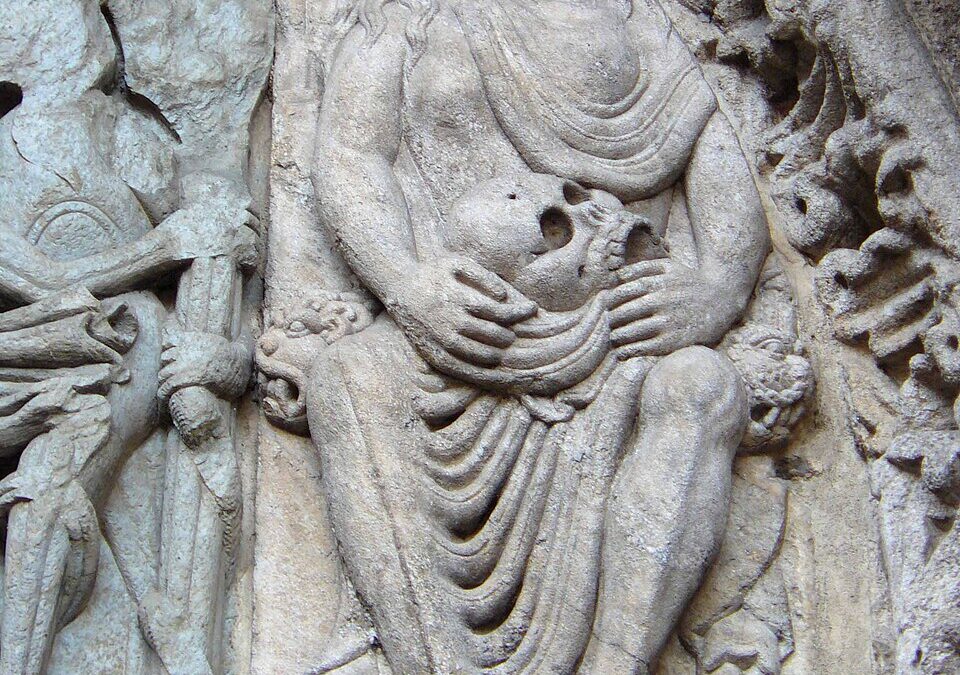
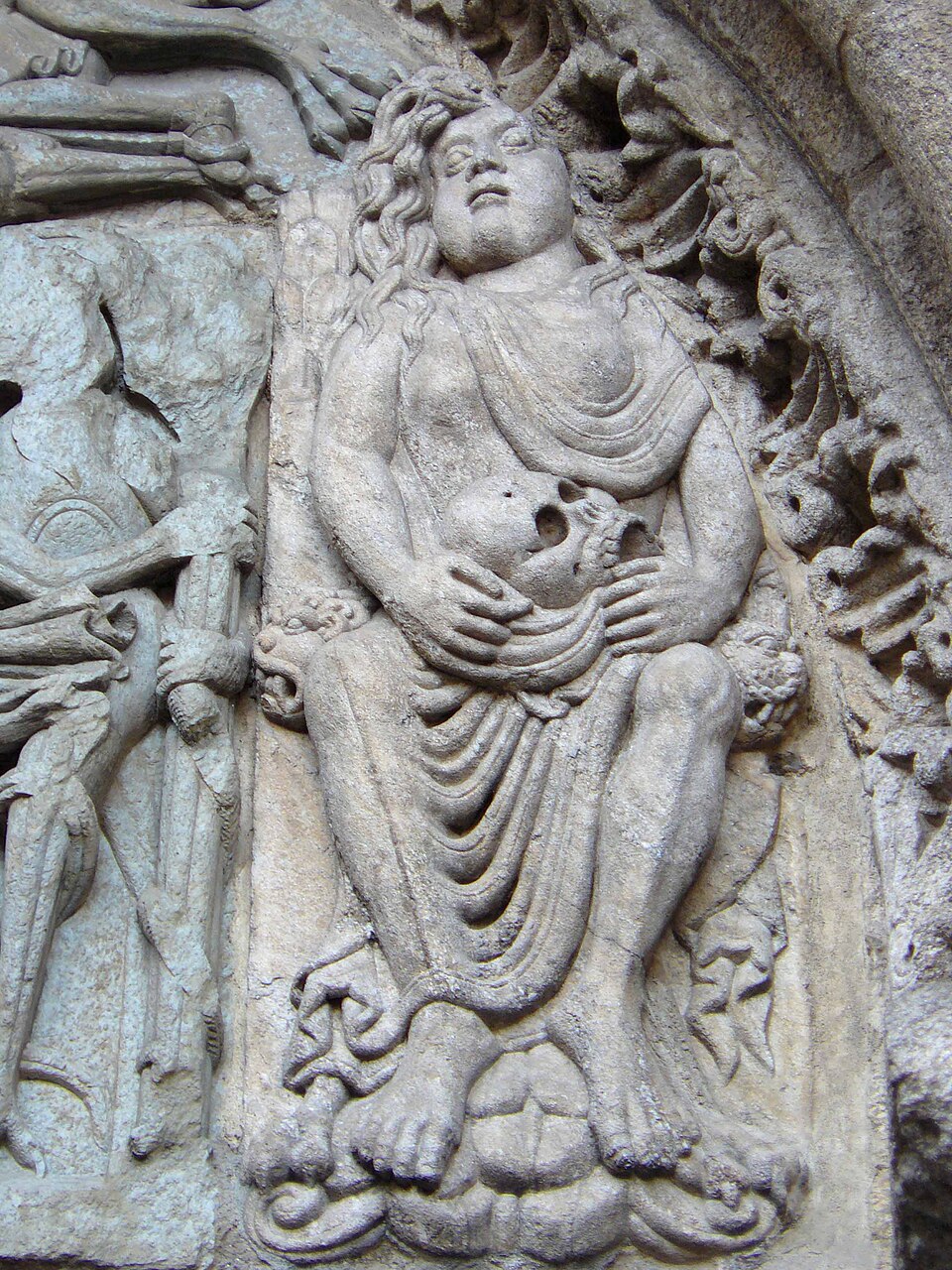
José María Anguita Jaén, a professor of Latin Philology in Lugo, has just published an extensive and in-depth study regarding the image of a woman holding a skull to her bosom—sculpted on the Platerías Portico of the Cathedral of Santiago de Compostela (ca. 1100). This figure is already mentioned in the Liber Sancti Iacobi, and its meaning continues to fascinate today, having given rise to numerous interpretations.
The article—a contribution to a tribute honoring Canon and Archivist José María Díaz Fernández—is available online: Niveles de lectura y paralelos literarios de la Mulier adulterata (Liber Sancti Iacobi 5,9) del Pórtico de Platerías: Ruodlieb y el Cuento de los tres consejos (ATU 910B).
In this work, the scholar combines iconographic study with source analysis. First, he explains the image of the woman with the skull as a figure whose various meanings—identified by scholars—can coexist harmoniously if placed on different levels of interpretation (anagogical, tropological, and literal).
Second, the study focuses on the narrative surrounding this figure, whom the Liber Sancti Iacobi interprets as a punished adulteress. Among the roughly contemporary texts featuring this motif, the Ruodlieb (11th century) stands out; it points to the motif’s possible source—a tale lost in its written form but which has spawned multiple oral variants, collected under the modern title The Tale of the Three Pieces of Advice (ATU 910B)
Given its subject matter and the relevant dates, this tale may have originated as early as the 11th century within circles involved in the Gregorian Reform—circles concerned with the fact that marriage was still governed by customary law, which permitted situations like the one depicted on the Platerías Portico.